Beijing · Shanghai · Guangzhou · Shenzhen | A 2026 City Selection Guide for Foreign Investors
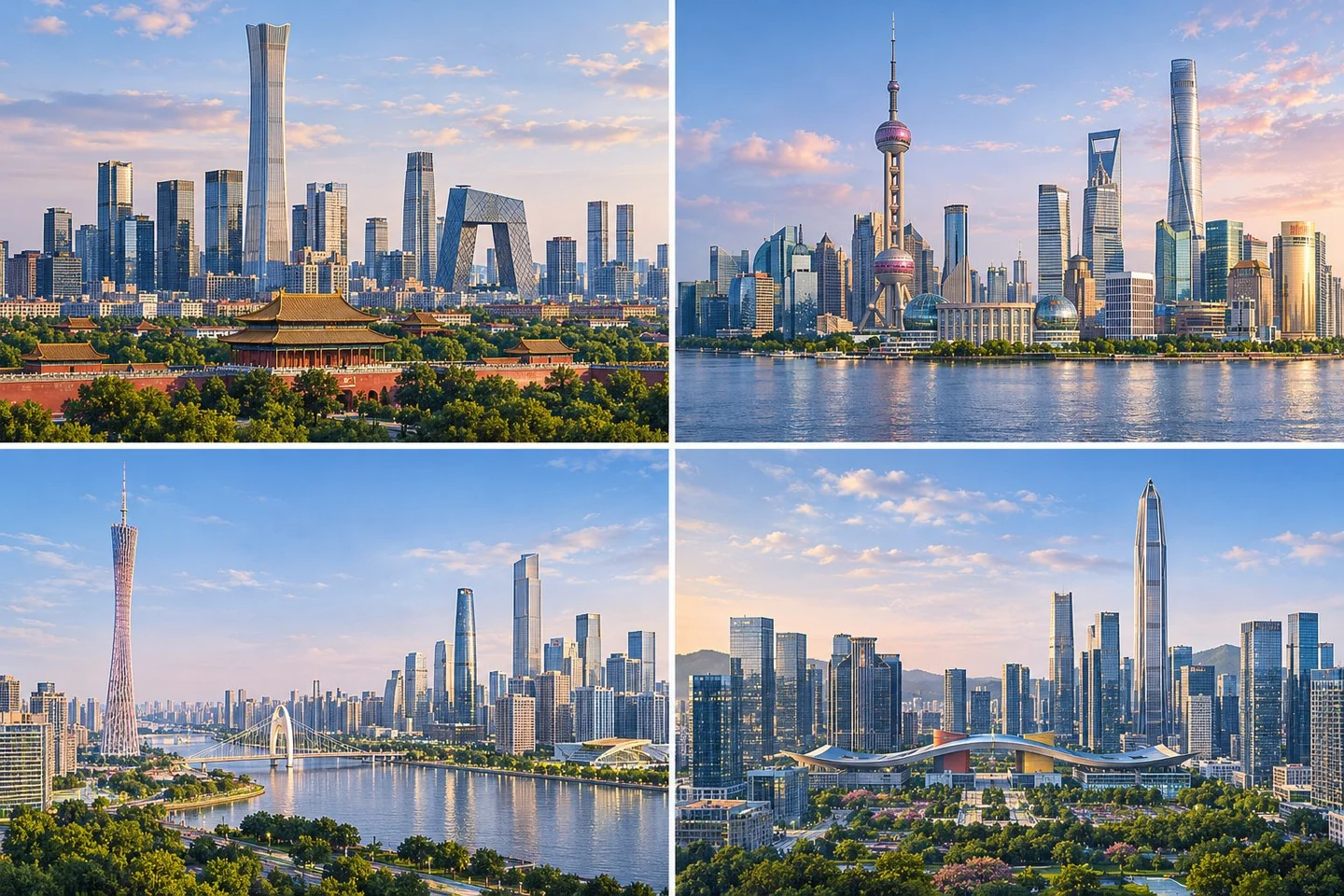
Illustration: AI-generated city landmarks; not documentary photography.
If you plan to start a business in China, the first major decision may not be your company name or registered capital. It may be where to operate. Beijing, Shanghai, Guangzhou and Shenzhen all offer large markets, modern infrastructure and extensive talent pools. Yet the four cities differ considerably when it comes to finding customers and suppliers, leasing premises, hiring staff and settling in for the long term. Rather than choosing solely by GDP, this guide compares economic structure, industrial ecosystems, regional supply chains, life for foreign residents, policies, housing and consumption costs to help you find a location that matches your business model.
Key Statistics at a Glance
| Metric | Beijing | Shanghai | Guangzhou | Shenzhen |
|---|---|---|---|---|
| GDP (RMB trillion) | 5.21 | 5.67 | 3.20 | 3.87 |
| Real GDP growth | 5.4% | 5.4% | 4.0% | 5.5% |
| Resident population (million) | 21.800 | 24.854 | 19.101 | 18.249 |
| Service-sector share of GDP | 86.0% | 79.3% | 75.0% | 62.5% |
| Annual per-capita disposable income (RMB) | 89,090 | 91,987 | 80,591 | 84,945 |
| Annual per-capita consumption (RMB) | 50,667 | 54,765 | 49,177 | 53,548 |
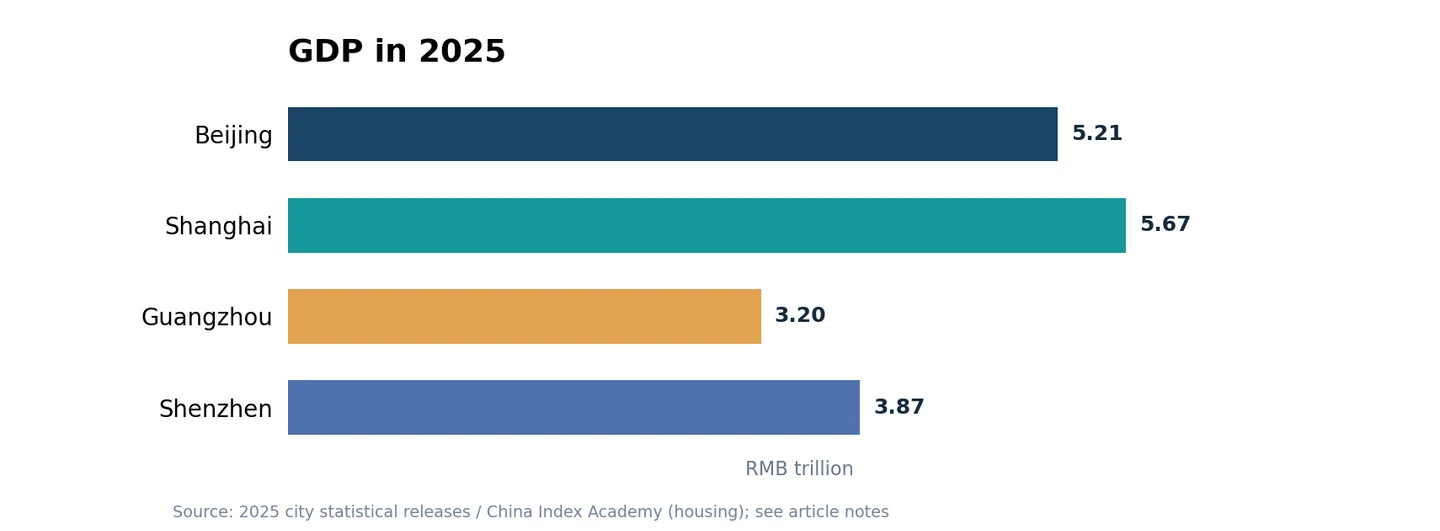
Figure 1. GDP of China’s Four First-Tier Cities, 2025
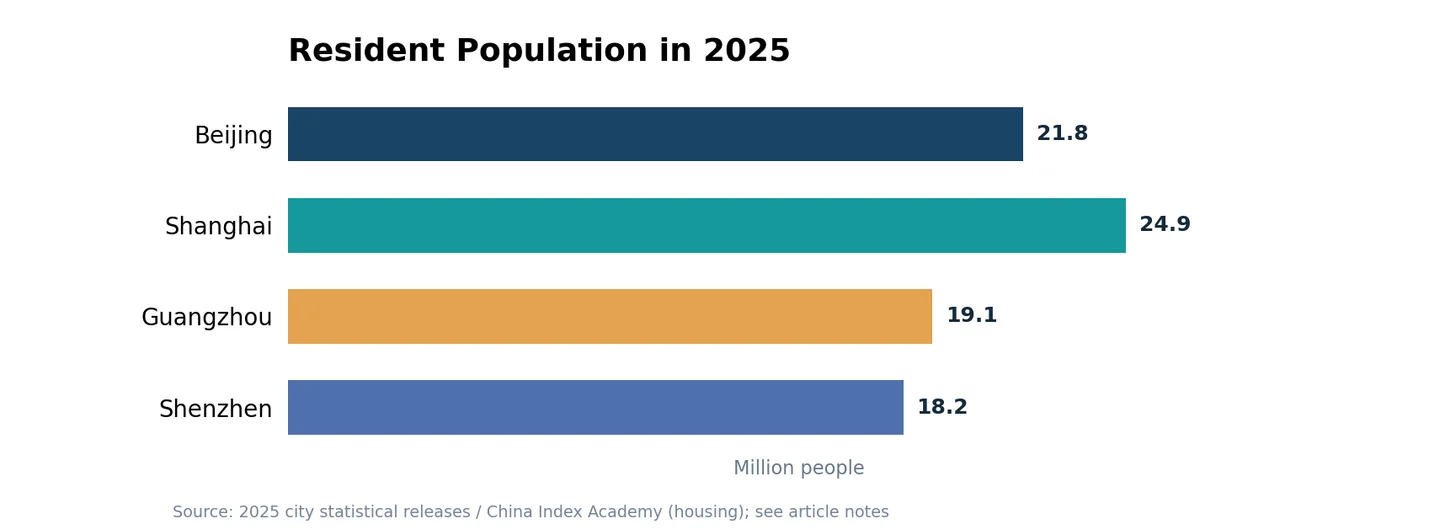
Figure 2. Resident Population, 2025
1. Economic Scale: GDP Alone Should Not Determine Your Location
In 2025, Shanghai recorded GDP of approximately RMB 5.67 trillion, followed by Beijing at RMB 5.21 trillion, Shenzhen at RMB 3.87 trillion and Guangzhou at RMB 3.20 trillion. Shanghai had the largest economy of the four; Beijing was especially service-oriented; Shenzhen combined manufacturing with modern services; and Guangzhou relied on trade, consumption, services and advanced manufacturing.
For an individual entrepreneur, a city’s GDP does not tell you how easy it will be to win customers. Proximity to suppliers, the concentration of potential clients, staffing costs and the local industry ecosystem may have a more direct impact on success.
2. Beijing: Major Corporate Clients, R&D and Professional Services
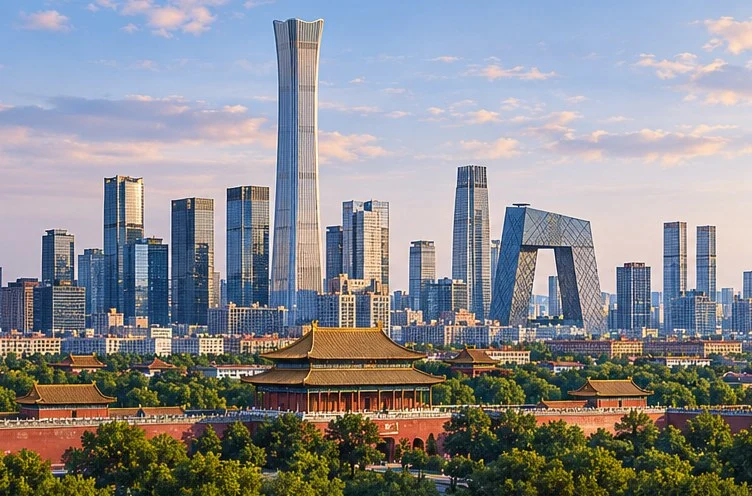
City illustration: Beijing (AI-generated, not a photograph)
Beijing brings together universities, research institutes, technology companies and major corporate headquarters. Opportunities include artificial intelligence, software and information services, integrated circuits, biopharmaceuticals, fintech, media, industrial technology and professional consulting.
Haidian and Zhongguancun are associated with research and technology ventures; Chaoyang CBD hosts multinational businesses, finance and professional services; the Beijing Economic-Technological Development Area (Yizhuang) covers robotics, automotive technology, medical technology and advanced manufacturing; and Shunyi offers airport-linked logistics resources.
Beijing also connects to the wider Beijing–Tianjin–Hebei industrial region. A company might place R&D and sales in Beijing while organizing manufacturing or supporting operations in nearby cities.
Major events include the China International Fair for Trade in Services (CIFTIS), the Zhongguancun Forum, the China International Machine Tool Show (CIMT) and information-and-communications exhibitions. Check each event’s official calendar and venue for the relevant edition.
Beijing has two major commercial airports, high-speed rail and nationwide transport links. International talent service centers and coordinated work-permit and residence-related services continue to develop. Incorporating a company, obtaining a work permit and obtaining a residence permit remain separate procedures.
Best suited to B2B software, technical solutions, R&D, consulting, and businesses that depend on major corporate customers or research institutions. Less compelling for small trading start-ups whose overriding goal is the lowest sourcing or production cost.
3. Shanghai: Cross-Border Business, International Trade and High-Value Services
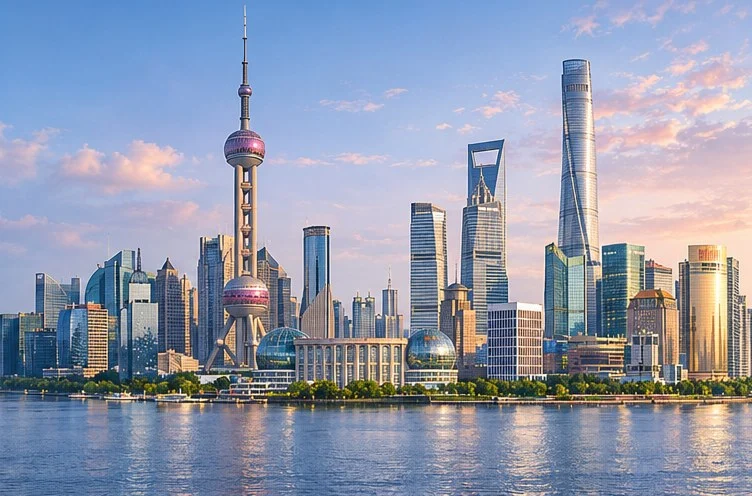
City illustration: Shanghai (AI-generated, not a photograph)
Shanghai’s economy exceeded RMB 5.67 trillion in 2025. International finance, shipping, trade, multinational headquarters and professional services are key strengths. It is a logical option for businesses requiring financial institutions, logistics partners, compliance advisers, brand distribution channels and multinational networks.
Lujiazui specializes in finance and professional services; Zhangjiang Science City supports biomedicine, integrated circuits and AI; the Lingang Special Area develops advanced manufacturing, shipping and trade; and the Hongqiao International Central Business District supports commercial and exhibition-related trade.
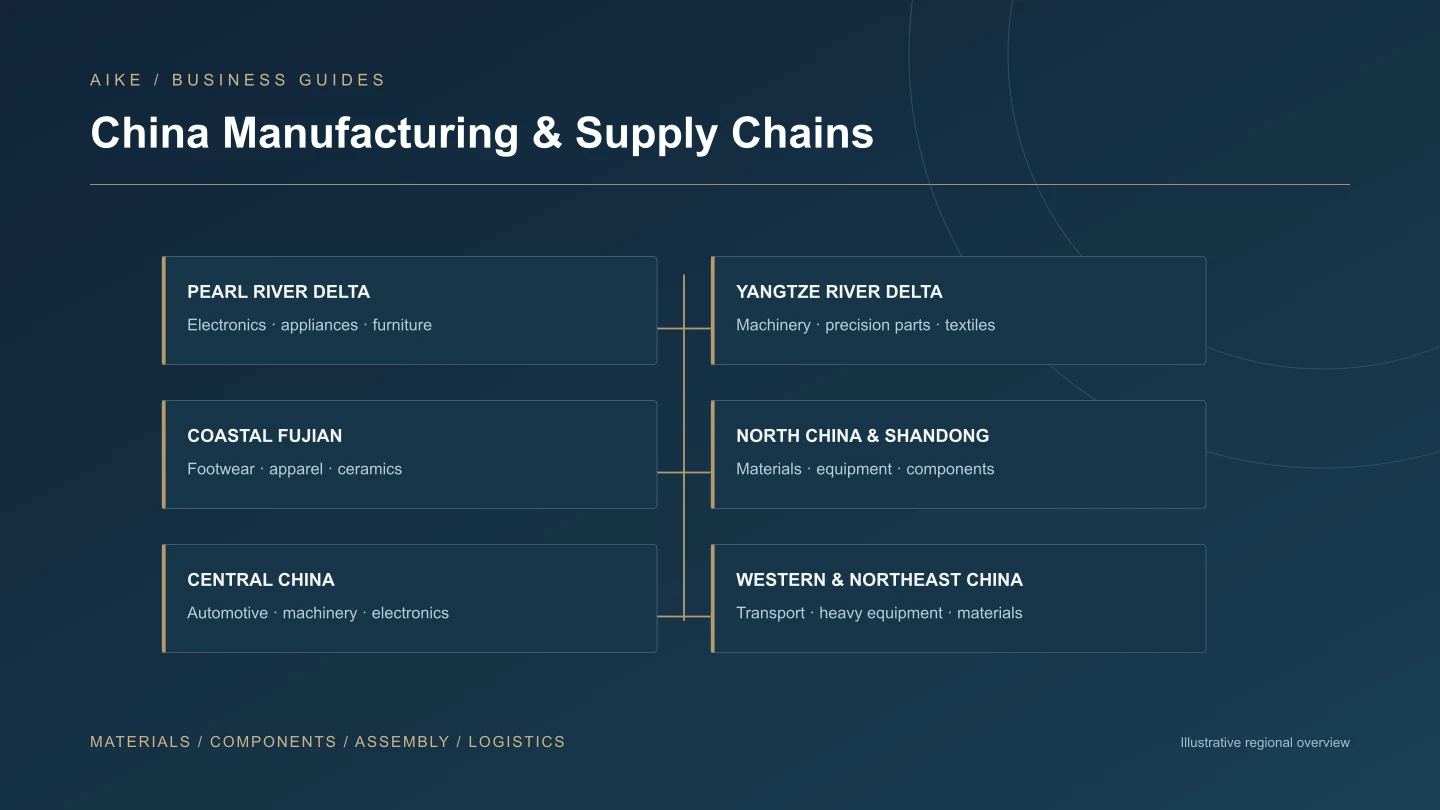
The Yangtze River Delta supply chain is central to Shanghai’s appeal: electronics and precision manufacturing in Suzhou and Kunshan; equipment and new energy in Wuxi and Changzhou; the digital economy in Hangzhou; and port-related manufacturing in Ningbo. Together these make a “Shanghai headquarters + regional production” structure feasible.
Leading exhibitions include the China International Import Expo (CIIE), China International Industry Fair (CIIF), SNEC energy exhibitions, and specialized auto and medical-device shows. Some events are not held in Shanghai every year.
Shanghai has international airports, the Port of Shanghai and the Yangtze River Delta rail network. Multilingual service portals and international talent services are relatively well developed, although housing, certain international services and commercial property are often costly.
Best suited to foreign brands entering China, importers, corporate headquarters, professional-service firms and international businesses requiring production partners in the Yangtze River Delta.
4. Guangzhou: International Trade, Consumer Products and Pearl River Delta Sourcing
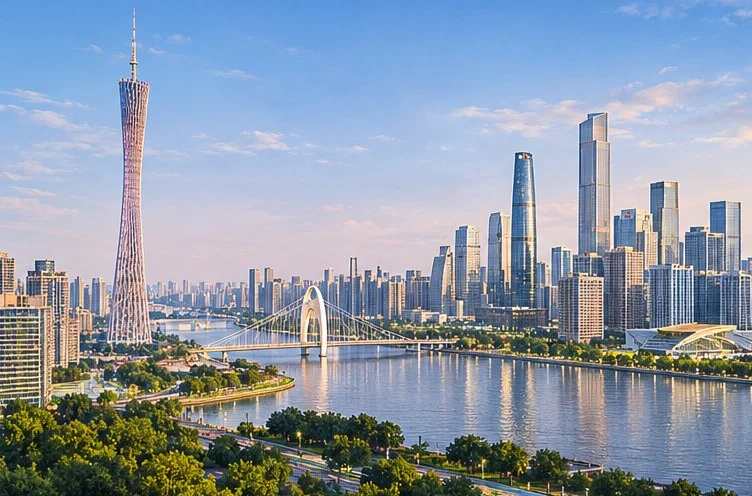
City illustration: Guangzhou (AI-generated, not a photograph)
Guangzhou has a long trading history and a mature ecosystem of wholesale markets, export service providers, logistics companies and consumer-product suppliers. It offers practical advantages for entrepreneurs focused on physical-product sourcing, wholesale, exports and cross-border e-commerce.
Its surrounding supply chain includes furniture, home appliances and building materials in Foshan; electronics, molds and precision manufacturing in Dongguan; lighting, appliances and hardware in Zhongshan; machinery and metal products in Jiangmen; and electronic technology in Shenzhen.
The Canton Fair is among Guangzhou’s signature trading events. Buyers can also consider the China International Furniture Fair (Guangzhou), beauty industry exhibitions, specialty markets and industry shows. Dates should be checked against organizers’ official announcements.
Guangzhou Port, Nansha port facilities, Baiyun International Airport and the Pearl River Delta road and rail networks support international freight and multi-city factory visits. The Nansha free trade area emphasizes shipping, trade, finance and innovation; registering there does not automatically qualify a company for subsidies or preferential tax treatment.
Foreign buyers can access established international sourcing services in major commercial districts, although Chinese-language assistance may still be necessary for tax matters, banking and sector-specific licensing.
Best suited to import-export trade, clothing, beauty products, furniture, building materials, consumer brands, sourcing agencies and cross-border e-commerce.
5. Shenzhen: Electronics, Smart Hardware and Technology Commercialization
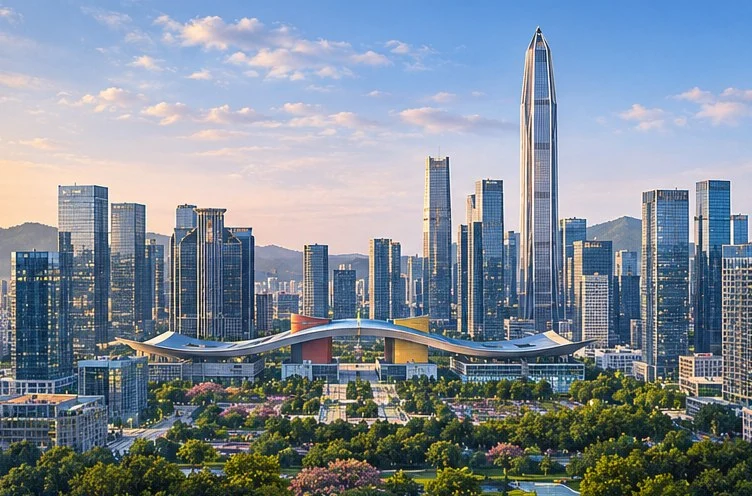
City illustration: Shenzhen (AI-generated, not a photograph)
Shenzhen stands out in electronics, advanced manufacturing and the integration of software with hardware. Product development, components, printed circuit boards (PCBs), structural design, molds, prototyping, testing and manufacturing are linked through a relatively dense ecosystem.
Nanshan has many technology and software firms; Futian hosts finance and headquarters services; Bao’an offers electronics manufacturing, equipment and industrial suppliers; Longhua and Longgang support intelligent manufacturing; and Qianhai emphasizes modern services and cooperation with Hong Kong.
Shenzhen works closely with Dongguan, Huizhou, Guangzhou and Zhongshan within the wider Pearl River Delta. Its proximity to Hong Kong can facilitate some cross-border commercial arrangements, but customs, taxation and employment rules differ between jurisdictions.
Relevant exhibitions include the China Hi-Tech Fair, China Information Technology Expo and specialized industrial-manufacturing and equipment shows. They can be useful for customer development in smart hardware, robotics, electronics and factory automation.
Shenzhen has Bao’an International Airport, Yantian and Shekou ports, high-speed rail and border crossings. Services for foreign businesses and talent continue to improve, but work and residence permits are not automatically granted.
Best suited to electronics, robotics, AI devices, smart-home products, industrial automation, product design and hardware start-ups.
6. Salaries, Consumption, Home Prices and Rent: Understanding Costs
In 2025, annual per-capita household consumption expenditure was RMB 54,765 in Shanghai, RMB 53,548 in Shenzhen, RMB 50,667 in Beijing and RMB 49,177 in Guangzhou. These figures describe spending by residents; they are neither budgets for foreign entrepreneurs nor absolute consumer-price indices.
In the October 2026 sample, average second-hand residential asking-price indicators were RMB 62,571 per square meter in Shenzhen, RMB 60,145 in Beijing, RMB 55,188 in Shanghai and RMB 32,059 in Guangzhou. Prices vary widely by district and property; these figures are not quotations for a specific transaction.
Sample residential rent in October 2026 was approximately RMB 80.8/sq. m/month in Beijing and RMB 85.0 in Shanghai. For the third quarter of 2026, Guangzhou was around RMB 45–50 and Shenzhen exceeded RMB 80. For a 60-sq. m apartment, that implies rough monthly figures of RMB 4,850 in Beijing, RMB 5,100 in Shanghai, RMB 2,700–3,000 in Guangzhou and more than RMB 4,800 in Shenzhen. These are illustrative calculations, not confirmed rental listings.
Annual per-capita disposable income in 2025 was RMB 89,090 in Beijing, RMB 91,987 in Shanghai, RMB 80,591 in Guangzhou and RMB 84,945 in Shenzhen. This is not median pay. Comparable, fully verified data for the median monthly salary of all workers in the four cities was not available in the source material. Recruitment budgets should instead reflect role, experience, industry and employer social-insurance costs.
The Consumer Price Index (CPI) measures how prices change over time; it should not be used to rank the absolute cost of living across cities. Practical budgets should also account for office space, transport, social insurance, healthcare and children’s education.
| Metric | Beijing | Shanghai | Guangzhou | Shenzhen |
|---|---|---|---|---|
| Oct. 2026 second-hand home indicator (RMB/sq. m) | 60,145 | 55,188 | 32,059 | 62,571 |
| Approx. rent for a 60-sq. m unit (RMB/month) | ~4,850 | ~5,100 | ~2,700–3,000 | >4,800 |
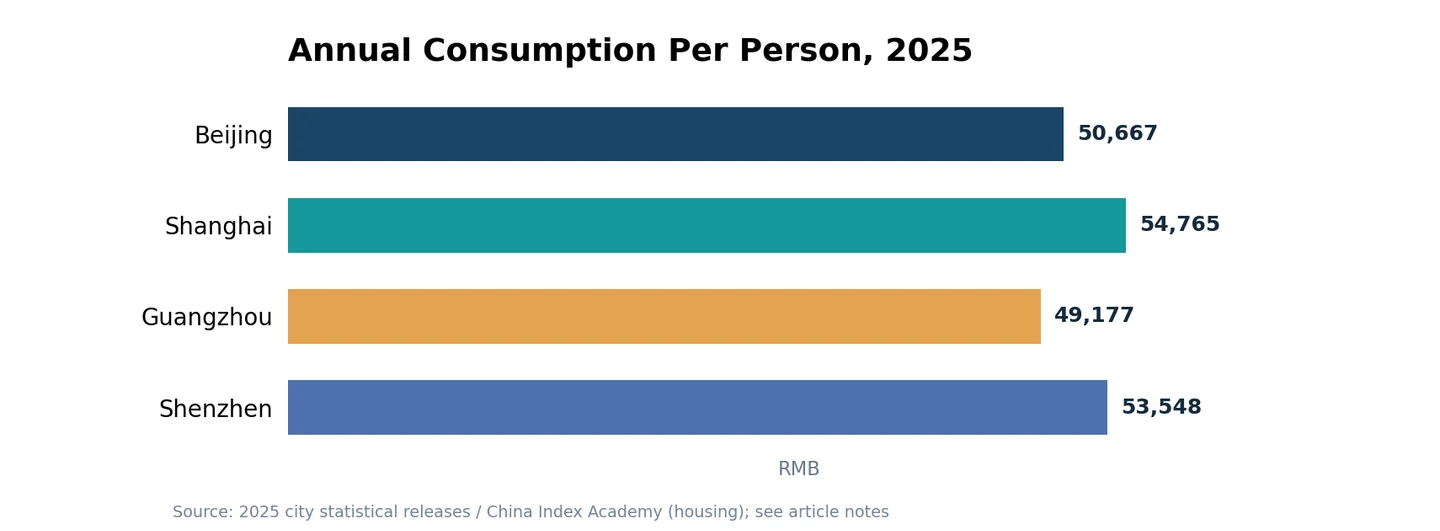
Figure 3. Annual Per-Capita Consumption Expenditure, 2025
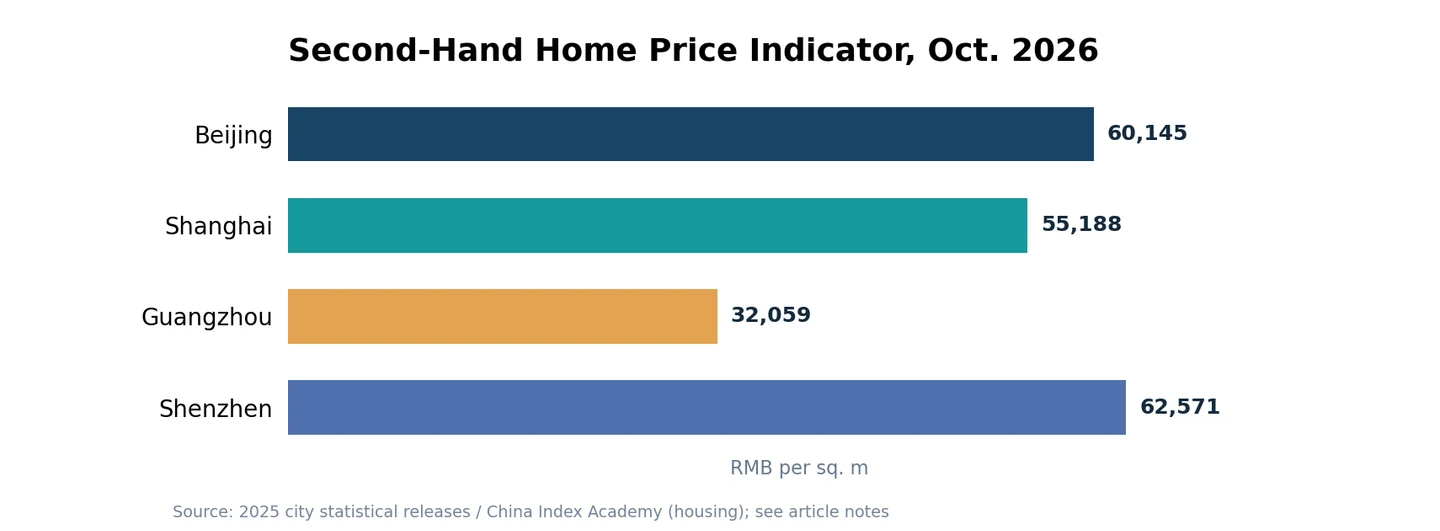
Figure 4. Second-Hand Residential Price Indicator, October 2026 (Sample Average)
7. Foreign Residents and Administrative Convenience
China’s seventh national population census recorded 845,697 foreign nationals nationwide in 2020. Certain figures reported for Shanghai, Beijing and Guangdong combine residents from Hong Kong, Macao and Taiwan with foreign nationals and must not be presented as foreign-only counts. Comparable, complete 2026 foreign-resident counts for all four cities were not available; no unsupported ranking is offered here.
Shanghai and Beijing have mature resources in international schooling, multinational business services, multilingual information and healthcare. Guangzhou has established sourcing and international trading networks, while Shenzhen is closely associated with technology ventures, hardware R&D and cooperation with Hong Kong. Convenience varies considerably by district.
Administrative convenience should not be measured solely by the number of English-language counters. Company incorporation, bank accounts, tax administration, foreign-investment access, work permits and residence permits must be evaluated separately. Processing depends on industry, documentation and applicant circumstances.
8. Investment Policy: Local Incentives Are Not Universal Entitlements
Foreign investment in China is governed by national law, the foreign-investment negative list and applicable licensing rules. Outside the negative list, domestic and foreign investment generally receive consistent market-access treatment, while sector-specific permits and restrictions may still apply.
In Beijing, investigate Zhongguancun, the Beijing Pilot Free Trade Zone and services-sector opening measures. For Shanghai, examine Pudong, Lingang and Hongqiao; for Guangzhou, Nansha; and for Shenzhen, Qianhai and Shenzhen–Hong Kong cooperation initiatives. Eligibility for local support may depend on substantive operations, R&D, taxes, hiring, industry classification and application deadlines.
Never assume that a promotional “preferential tax rate” applies simply because a business is registered in a particular park. Verify the legal basis, effective period, competent authority, conditions and ongoing compliance obligations.
9. Conclusion: I Would Choose According to the Business Model
For access to research institutions, technical talent and major corporate customers, Beijing is a strong candidate. For international finance, import channels and multinational services, Shanghai stands out. For imports, exports, wholesale sourcing and the Pearl River Delta supply chain, Guangzhou offers practical advantages. For electronics design, prototyping and smart-hardware commercialization, Shenzhen is particularly relevant.
The questions that matter are: Where are your customers and suppliers? Which positions are hardest to fill? How often will you need to visit factories? Does your sector require a license? Can your family afford the local cost of living? Will the company need cross-border funding and tax arrangements?
Choosing a city in China means more than choosing a registered office address. It means choosing your future customer network, industrial ecosystem and long-term operating structure.
Data Notes and Sources
GDP, resident population and household income/expenditure use the cities’ 2025 statistical releases. Home-price indicators use an October 2026 sample from China Index Academy; residential rents draw on 2026 September–October observations. Cross-city comparisons are intended for macro-level orientation, not specific property or salary quotations. Up-to-date, comparable foreign-resident totals and salary medians remain unavailable in the cited source set.
Beijing 2025 statistical release: https://tjj.beijing.gov.cn/tjsj_31433/sjjd_31444/202603/t20260324_4564401.html
Shanghai 2025 statistical release: https://tjj.sh.gov.cn/tjgb/20260330/e0772941e8e041eaaad2df850b44ef98.html
Guangzhou 2025 statistical release: https://tjj.gz.gov.cn/gkmlpt/content/10/10800/post_10800227.html
Shenzhen 2025 statistical release: https://tjj.sz.gov.cn/gkmlpt/content/12/12803/post_12803919.html
National Bureau of Statistics, Seventh Census, Bulletin No. 8: https://www.stats.gov.cn/sj/zxfb/202302/t20230203_1901088.html
China Index Academy, housing and rental indices: https://www.cih-index.com/
Ministry of Commerce, foreign-investment policy: https://www.mofcom.gov.cn/